Title I & underserved districts
Work with schools that have tight budgets and thin staffing: free and grant-funded pathways, train-the-trainer models that run without outside help, and equity built into the guidance from day one.
I work on how AI gets governed and adopted in K-12: statewide guidance, district policy and rollouts that teachers actually use. Here's a record of that work, where it's been published and where I've presented it.

Selected work with Colorado's statewide AI effort, state agencies, professional associations and districts.
Leading a community session walking educators and families through the state's updated AI education guidance.
Named task force member and contributor to CEI's two-part practitioner guidance on AI readiness, literacy, academic integrity and governance. Endorsed by CALET and CASE.
Brought the roundtable back by request for the conference closing out ElevateAI, the three-year Colorado initiative supporting eight pilot districts as they moved AI from exploration to implementation.
Led this breakout roundtable on separating meaningful AI signals from hype, and built the facilitator guide and fireside prep for the statewide summit, which CEI reported beat its projections.
Co-presented with Jodie Darnell, LCSW, school social worker at Aurora Public Schools. Covered ethical AI use with professional oversight, evaluating AI output for accuracy, developmental fit, cultural responsiveness and safety, and cutting administrative load so social workers spend more time with students. Aligned to CDE's Specialized Service Professional standards.
Co-presented with Mindi Onwuegbu of Denver Public Schools. Helped school communicators use AI in their own work and talk about it clearly with parents, boards, staff and media, closing the gap between using AI and explaining it publicly.
Presented to School to Work Alliance Program providers on using AI to prepare Colorado's young adults with disabilities for competitive integrated employment, connecting transition services to the state's ElevateAI work and district AI leaders.
Quoted in Common Sense Privacy's case study on Denver Public Schools' year-long AI evaluation, RFP and train-the-trainer rollout: 1,200 teachers trained and a student advisory council at South High School.
Serving on the statewide AI education task force convened by CEI with the Colorado Department of Education, alongside district leaders, students, state agencies and industry partners.
The districts with the least margin for error get the least support when new technology arrives. A lot of my work lives there: Title I schools and districts, rural sites, special education and transition programs, and the student support professionals who carry the heaviest caseloads.
Work with schools that have tight budgets and thin staffing: free and grant-funded pathways, train-the-trainer models that run without outside help, and equity built into the guidance from day one.
Started in classrooms as a 1:1 special education paraeducator. Today I help transition programs like SWAP use AI to prepare young adults with disabilities for competitive integrated employment.
Statewide work through CEI and ElevateAI focused on closing resource gaps between urban and rural districts, so a student's zip code doesn't decide their access to AI literacy.
Sessions for school social workers, counselors and mental health teams on cutting paperwork safely so more of their time goes to students.
Business mentor to high school students through Denver Public Schools' Business Mentor Program, helping students build real-world skills, confidence and professional networks.
Coached a developmental youth triathlon team for a nonprofit club, taught art workshops with local nonprofits, served as a classified-staff representative, and supported reentry and workforce programs in edtech.
Responsible AI isn't just about avoiding harm. It's about making sure the benefits don't skip the students who were already being skipped.
Twenty questions, about ten minutes. See your district's governance gaps ranked by legal exposure first, with a concrete next step for each. Vendor-neutral. No account. Nothing you enter leaves your browser.
I came to AI policy sideways, which is probably why I care so much about whether it works on a Tuesday afternoon. I've been a special education paraeducator, a retail GM and buyer, a field rep, a bike-company co-founder and an edtech CSM. Every one of those jobs taught me the same thing: the plan only matters if the people doing the work can use it.
Today I live on the west side of the Denver metro with my wife, our toddler, a second kid on the way and a dog who has strong opinions about bedtime. When I'm not working, I'm usually outside or on a mat.
I also build things, mostly late at night. Vibe-coded nerd apps, research pipelines, browser games and automation workflows are how I keep expanding my own coding chops and knowledge base.
Meet fast-moving technology with cautious optimism: clear-eyed about the risks, intentional about the choices, and human-first every time.
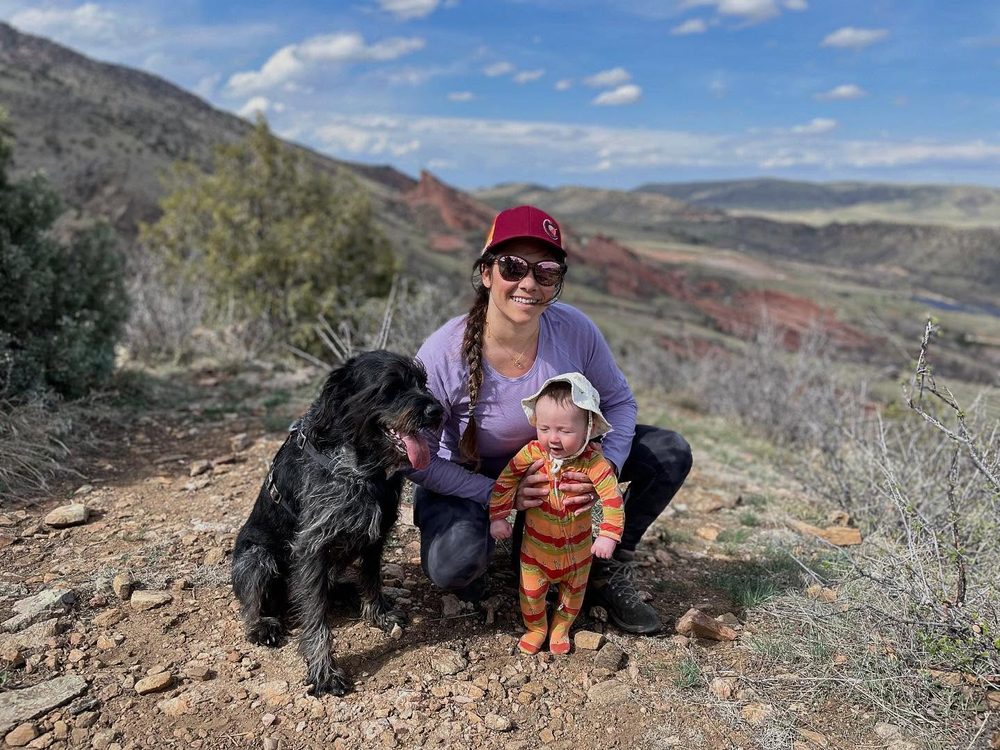
Two adults, two little ones by spring, one dog. Weekends are for them.
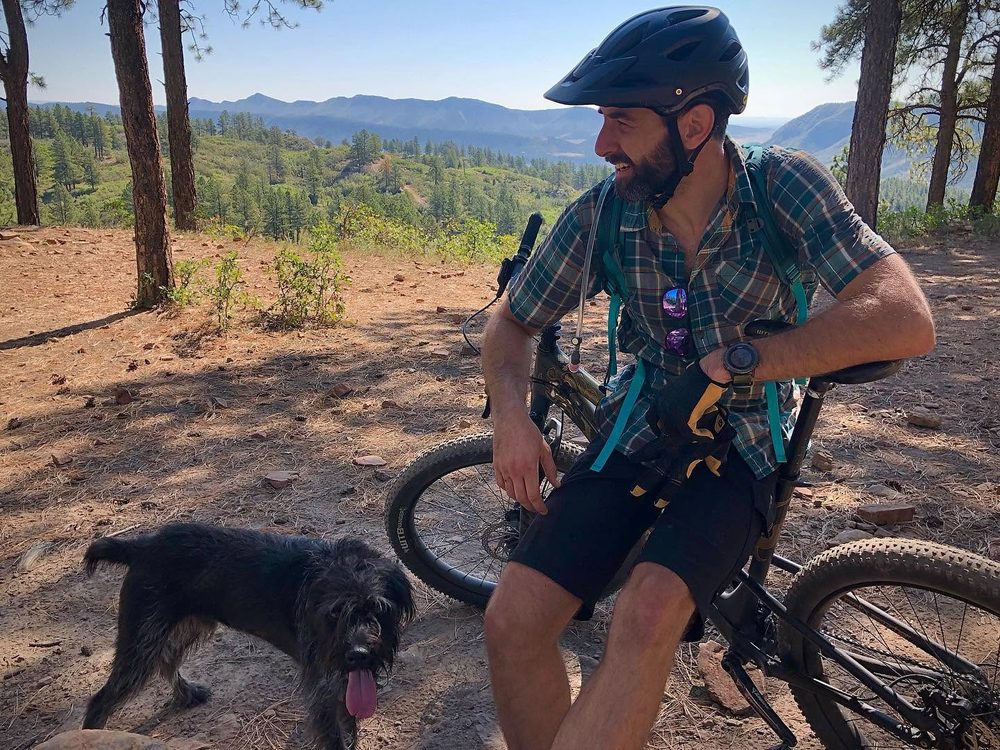
Front Range singletrack, ex-titanium-bike guy, still chasing the perfect descent.
Blue belt. The best lesson in staying calm under pressure I've found.
Trail running, backpacking and camping. Former triathlete and USAT-certified coach.
Building small AI apps and workflows to learn by shipping.
Business mentor to DPS high school students. More on giving back.
Let's talk
Happy to talk K-12 AI policy, speaking invitations or anything on this page.
[email protected] · linkedin.com/in/evanlapka